This Korean street food guide covers the classics you’ll find on every corner, plus the seasonal treats worth planning your trip around. Street food carts (pojangmacha) are everywhere in Korea, and they’re one of the easiest, cheapest ways to eat well while exploring. This whole category of food is called bunsik (분식) in Korean — and while the cart experience is the real deal, most bunsik items are also common enough that you can order them through delivery apps like Baemin or Coupang Eats if you’d rather eat at home. Here’s what’s actually worth trying, what it costs, and where to find the good stuff.
For more on ordering delivery in Korea, see our guide on Korean delivery app culture.
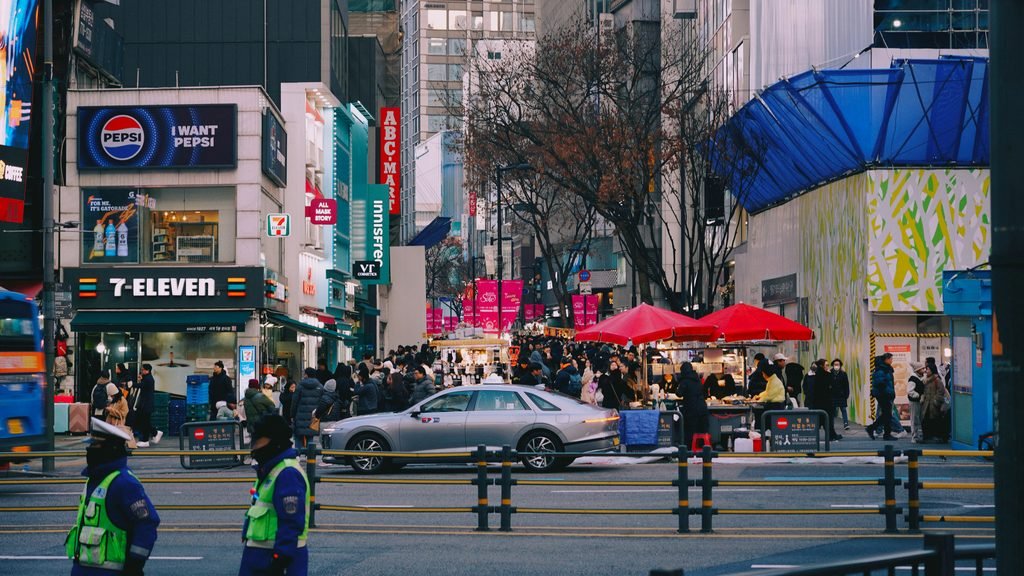
The everyday classics
You’ll find these three at pretty much any street cart, in any neighborhood, any time of year:
- Tteokbokki (떡볶이) — chewy cylindrical rice cakes simmered in a spicy-sweet red sauce, Korea’s most iconic street snack. Around 3,000 KRW.
- Sundae (순대) — Korean blood sausage, usually made with glass noodles and pork blood stuffed into intestine casing, sliced and served plain or with a dipping salt. Around 5,000 KRW.
- Twigim (튀김) — an assortment of deep-fried snacks (vegetables, mandu/dumplings, sweet potato, squid) similar to tempura. Around 3,000 KRW for 3 pieces.
- Odeng/eomuk (오뎅/어묵) — fish cake skewers simmered in broth. Around 1,500 KRW each.
My personal favorite combo is “tteoksuntwi” (떡순튀) — tteokbokki, sundae, and twigim together, dipping the sundae into the spicy tteokbokki sauce. Even eating generously, two people can fill up for a little over 10,000 KRW total.
One tip almost every street food regular knows: when you order anything from a cart, the fish cake broth (odeng guk) is free. Just ladle some into a paper cup yourself and drink it alongside your food.
Tteokbokki has become popular enough internationally that it now has its own detailed entry on Wikipedia, covering its history and variations.
Seasonal street food
Street food in Korea shifts with the seasons:
- Summer: patbingsu (팥빙수) — shaved ice topped with sweet red beans, condensed milk, and various toppings
- Winter: bungeoppang (붕어빵) — fish-shaped pastries filled with sweet red bean paste, about 2,000 KRW for 3; hotteok (호떡) — flat pancakes filled with a melted brown sugar and cinnamon syrup, around 2,000 KRW; and gyeranppang (계란빵) — a soft bread roll baked with a whole egg on top
There’s a well-known saying in Korea that you should always carry 3,000 won in your pocket during winter — because you never know when you’ll walk past a bungeoppang or hotteok cart you can’t say no to. Skipping these in winter genuinely feels like missing out.
Korean Street Food Guide: Where to Find It
The everyday carts above show up in basically every neighborhood, including right outside subway stations — genuinely worth trying just because they’re everywhere and easy to stumble into.
For more variety, head to markets and shopping streets like Dongmyo Market, Myeongdong, or any traditional five-day market (오일장). These spots have a wider range of street food than your average neighborhood cart.
A few notes on specific areas:
- Myeongdong tends to be priced for tourists, so it’s noticeably more expensive — locals generally don’t eat street food there for that reason
- Gwangjang Market has stalls inside the market itself, and beyond the usual snacks, you’ll also find full meals like noodles or bibimbap at the carts
- If you’d rather not eat standing at the cart, takeout is almost always an option — just ask
Good options for first-timers
If you’re not sure where to start, a few items are especially easy to like:
- Hotbar (핫바) — a fried fish cake skewer, often with sausage, cheese, or rice cake inside. Approachable and easy to enjoy even if you’re new to Korean street food
- Sotteok-sotteok (소떡소떡) — grilled skewers alternating rice cake and sausage, brushed with a sweet-savory glaze. Popular enough with tourists that it’s become a common sight in foreigner-heavy areas like Myeongdong’s food street
- Hotteok (호떡) — sweet, syrupy, and hard to dislike
A quick tip
If you want a more local experience, try street food in neighborhoods with more Korean foot traffic rather than the most tourist-heavy spots like Myeongdong or Gwangjang Market. You’ll likely pay less and get a more authentic version of the same food.
Heads up: some carts are unlicensed
Some of the best street carts — especially the ones locals talk about — operate without official permits, which means they won’t show up on apps like Naver Map. You’ll usually find these by word of mouth or by literally stumbling across them while walking around. Licensed carts tend to look more standardized and official in comparison. That said, even unlicensed carts generally try to keep things clean and hygienic — this isn’t a case of sketchy food, just informal business status.