When people think of Korean BBQ, they usually picture a restaurant with a grill built into the table. But Koreans grill meat at home all the time, too. I’m Korean Unni, and today I’m showing you how I do Korean BBQ at home, from the shopping list to the best part: wrapping it all up in a ssam.
Pork Belly vs. Pork Neck: Which Cut to Grill
Grilled pork belly, samgyeopsal (삼겹살), is one of Korea’s all-time favorite foods. It’s rich and fatty, and it crisps up beautifully on the grill.
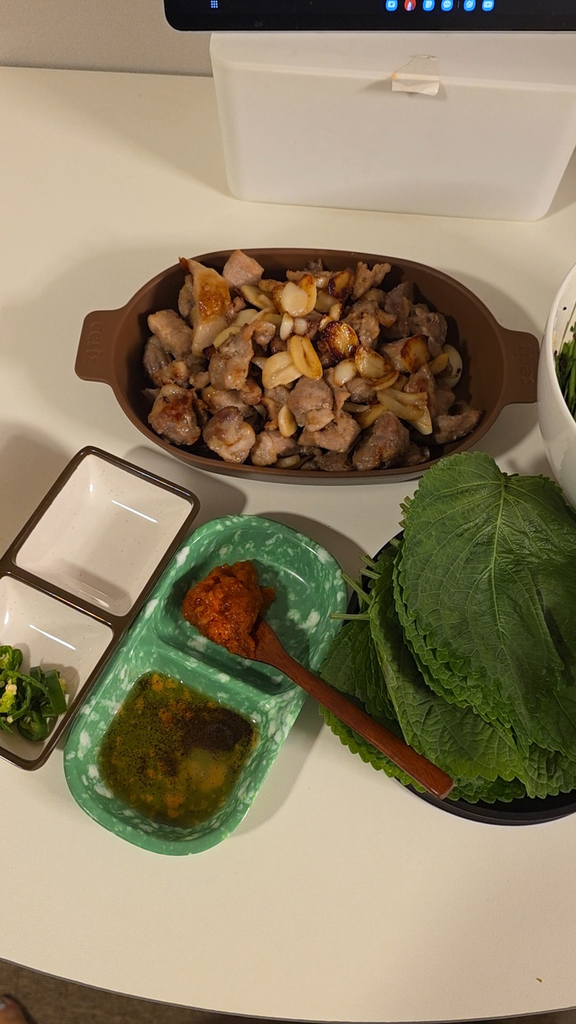
This time I used pork neck, called moksal (목살) in Korean. It’s a little leaner than pork belly but still juicy, so it’s a great choice if you want something less heavy. Both are completely normal for a Korean BBQ night, so pick whichever you like.
What to Buy at the Mart
You don’t need much. Here’s what I picked up at the mart:
- Pork (pork belly or pork neck)
- Perilla leaves (깻잎, kkaennip), for wrapping
- Garlic, to grill with the meat
- Garlic chives (부추, buchu), for a quick side dish
- Green chili peppers, if you like a little kick
- Ssamjang (쌈장), a thick dipping paste sold ready-made in tubs
Lettuce is another classic wrap if you can’t find perilla leaves. Many Koreans use both.
Grill the Garlic With the Meat
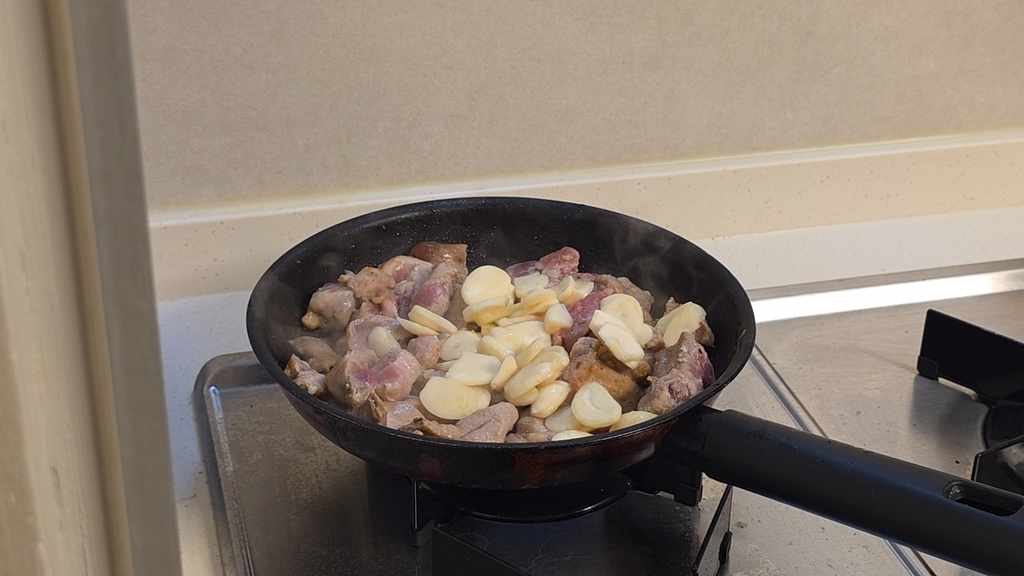
This is a small detail that makes a big difference. Put the garlic cloves right on the pan next to the pork. They cook in the pork fat and turn soft, golden, and sweet. If you’ve only had raw garlic with Korean BBQ, try it grilled at least once.
The Side Dish and Sauces
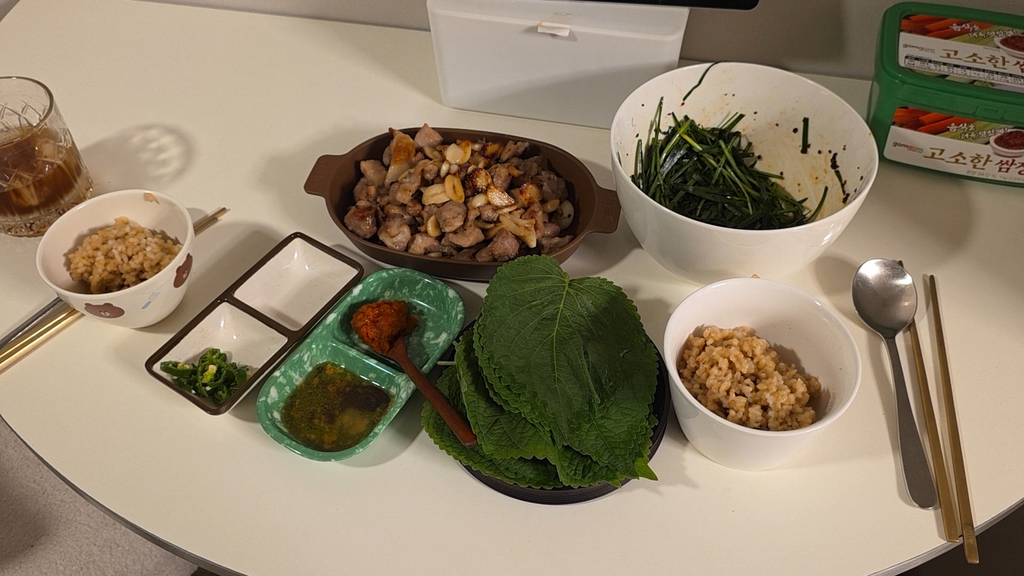
I served the meat with one side dish and two sauces:
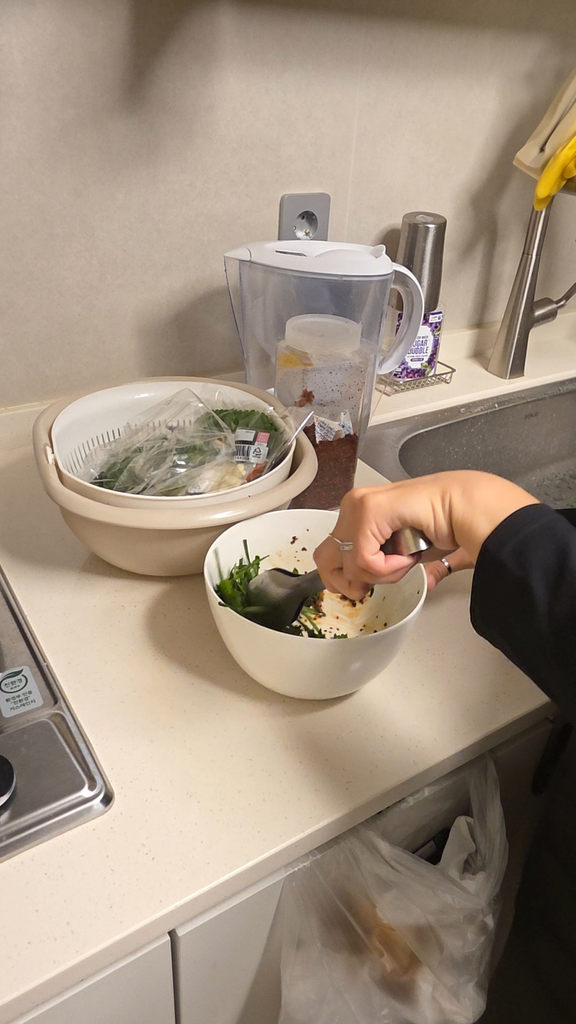
Buchu muchim (seasoned garlic chives)
Buchu muchim (부추무침) is a fresh, lightly seasoned garlic chive salad. It’s a classic partner for grilled pork because it cuts through the richness of the meat.
Gireumjang (sesame oil dip)
Gireumjang (기름장) is the simplest sauce there is: salt, pepper, and sesame oil. Dip a piece of pork in it and you’ll understand why it’s on almost every Korean BBQ table.
Ssamjang
Ssamjang (쌈장) is a savory, slightly spicy paste. A small dab goes inside your wrap and ties all the flavors together.
How to Eat It: Making a Ssam
Now the best part. Ssam (쌈) means a wrap, and this is how Koreans eat grilled meat:
- Lay a perilla leaf flat in your hand.
- Add a piece of meat.
- Add grilled garlic and a little buchu muchim.
- Add a dab of ssamjang, and a slice of chili if you want heat.
- Fold it up and eat it in one bite.
The one-bite part matters. Ssam is meant to be eaten whole so you get every flavor at once, so don’t make it too big.
Tips for Your First Korean BBQ at Home
- Keep the meat pieces small. Bite-sized pieces cook faster and fit neatly into a ssam.
- Don’t skip the perilla leaves. Their fresh, minty flavor is what makes Korean BBQ taste Korean.
- Want the restaurant version? If you’re in Korea and the menu is only in Korean, my guide to ordering at a Korean restaurant with no English menu will help, along with these Korean phrases for ordering food.
- Curious what Koreans drink with BBQ? Read about Korean drinking culture and soju etiquette.
Korean BBQ at Home FAQ
What is ssam in Korean food?
Ssam (쌈) means a wrap. You put meat, garlic, a side dish, and sauce on a leaf such as perilla or lettuce, then eat it in one bite.
What is the difference between samgyeopsal and moksal?
Samgyeopsal (삼겹살) is pork belly, and moksal (목살) is pork neck. Pork belly is fattier, while pork neck is a bit leaner but still juicy.
What is gireumjang?
Gireumjang (기름장) is a simple dipping sauce made with salt, pepper, and sesame oil. It’s a standard dip for grilled pork in Korea.
What are perilla leaves?
Perilla leaves (깻잎, kkaennip) are green leaves with a fresh, slightly minty flavor. Koreans often use them to wrap grilled meat.
Can I make Korean BBQ without a tabletop grill?
Yes. A regular frying pan works fine at home. That’s how many Koreans do it.
What’s your favorite Korean food? Tell me in the comments, and follow along for more everyday Korea.